The turbocharger vs supercharger question comes up whenever a diesel owner wants more power. Both forced induction devices push extra air into the cylinders, but they do it in very different ways and suit different kinds of work. This guide compares how each one works, their strengths and weaknesses, and why most Weichai diesel engines leave the factory with a turbocharger.
How a Turbocharger Works
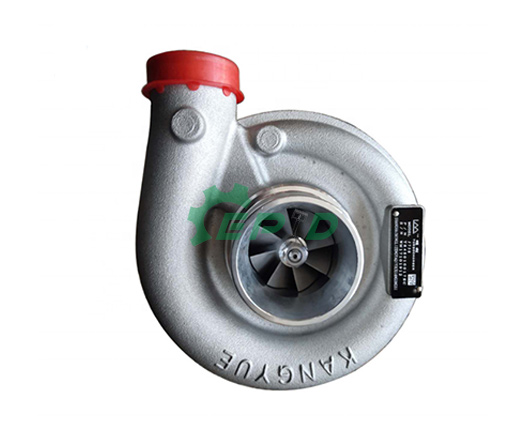
A turbocharger uses exhaust gas to spin a turbine wheel, which drives a compressor wheel on the same shaft. The compressor pushes dense air into the intake, letting the engine burn more fuel in each stroke. Because it harvests energy that would otherwise leave the exhaust pipe, a turbo is efficient and adds almost no parasitic load to the crankshaft.
Diesel engines are a natural fit for turbocharging. The exhaust is plentiful, and the strong bottom end of a diesel handles the extra cylinder pressure well. That is why Weichai engines such as the WD615, WP10, and WP12 run turbochargers as standard equipment in trucks, buses, and generator sets.
A turbocharger is made up of the turbine housing, compressor housing, and a center bearing cartridge. Variable geometry turbos adjust the vanes to keep boost responsive at low rpm, while a wastegate vents excess exhaust pressure at high speed. These design choices explain why one Weichai turbo may behave differently from another on a similar engine.
How a Supercharger Works
A supercharger is driven directly by the crankshaft through a belt, chain, or gear. It produces boost instantly because there is no turbine waiting for exhaust flow. The trade-off is parasitic loss: the supercharger consumes engine power to make power, which hurts overall efficiency. In heavy diesel applications, that fuel penalty is rarely justified. The parasitic load also grows with engine speed, so a supercharged diesel drinks noticeably more fuel under sustained highway or generator duty.
Superchargers do appear on some high-performance gasoline engines and on specialty equipment where instant throttle response matters more than fuel economy. For most commercial diesel operators, however, the efficiency of a turbocharger wins.
Turbocharger vs Supercharger: Key Differences
The biggest difference is the energy source. A turbo is exhaust-driven and highly efficient but can suffer lag at low engine speed. A supercharger is crank-driven and responds instantly but costs power and fuel. On a diesel, the turbocharger vs supercharger comparison usually favors the turbo because diesels produce strong exhaust flow and reward efficiency.
- Turbo: exhaust-driven, efficient, with slight lag
- Supercharger: crank-driven, instant boost, higher fuel use
- Turbo: ideal for long-running commercial diesels
- Supercharger: better where instant response outweighs fuel cost
Turbo lag has also been reduced by modern designs, including variable geometry turbines and wastegate control, which keep the compressor responsive across a wide rpm range. This closes most of the practical gap that once made superchargers attractive. For most commercial duty, the remaining lag is rarely noticeable in normal operation.
Choosing Forced Induction for a Diesel
For trucks, buses, and generators, a diesel turbocharger is the standard choice. The Weichai power parts turbocharger fits many popular Weichai applications, and EPID also stocks a wide Holset turbocharger parts range for replacement and repair work. If your current turbo is acting up, read the guide on Weichai turbocharger failure signs and replacement before ordering.
Reliability matters more than peak power for a working diesel. A turbocharger from a reputable source is typically cheaper to maintain than a supercharger, because it has no belt or gear drive to service and it runs on exhaust energy you would otherwise waste. Match the turbo to your boost and airflow targets, keep the oil feed clean, and the unit will usually outlast several injector service intervals.
Before ordering, confirm the turbo matches the engine series and its boost requirements. A mismatched compressor can surge, over-boost, or starve the engine of air. EPID lists fitment details for each unit, so you can cross-check the engine model before the part ships.
Frequently Asked Questions
Is a turbo or supercharger better for a diesel engine?
A turbocharger is better for most diesels. It recovers exhaust energy, improves efficiency, and adds little parasitic load, which suits the long running hours of commercial diesel engines.
What is the main disadvantage of a turbocharger?
The main disadvantage is turbo lag, the delay while exhaust flow builds up enough to spin the turbine. Modern variable geometry and wastegate turbos have reduced lag significantly.
Where can I buy a Weichai turbocharger?
You can buy the Weichai power parts turbocharger from EPID Diesel Engine Parts, along with Holset turbo parts for replacement jobs.
In the turbocharger vs supercharger debate, most diesel operators land on the turbo. Browse the Weichai diesel engine parts catalog to find a turbocharger matched to your engine.


