Correct Weichai camshaft crankshaft fitment is the foundation of any reliable diesel engine rebuild. Whether you service a heavy-duty WP12 truck, a WP8 workhorse, or a proven WD615 platform, the camshaft and crankshaft must match the exact engine family, displacement, and configuration. Ordering by engine model alone is not enough. This guide walks through the practical checks that experienced rebuilders use to confirm fitment before parts leave the warehouse.
Why Weichai Camshaft Crankshaft Fitment Deserves Careful Attention
The camshaft and crankshaft are the two most highly stressed rotating components in a diesel engine. The crankshaft converts combustion force into torque, while the camshaft controls valve timing and, on many Weichai platforms, the fuel injection sequence. If either part is mismatched to the block, bearing clearances, timing marks, and gear trains will not line up correctly.
Fitment errors rarely announce themselves at installation. They show up later as uneven wear, abnormal noise, poor oil pressure, or timing drift. That is why a disciplined fitment check before assembly is far cheaper than a second teardown. The goal is simple: confirm the engine family, confirm the part configuration, and confirm the mating components all belong to the same build.
Matching the Camshaft to the Correct Weichai Engine Family
Weichai builds several engine families that share design language but not interchangeable camshafts. The WP12, WP8, and WD615 each use distinct camshaft profiles, journal sizes, and drive arrangements. A camshaft that fits a WP12 block will not drop into a WP8 or WD615 without modification, and it should not be forced.
Start by identifying the engine plate and the original part reference on the removed camshaft. Compare lobe profiles, journal diameters, and the position of timing or drive features. For WP12 applications, review the Weichai WP12 camshaft listing to confirm the configuration matches your engine build. For WP8 engines, the Weichai WP8 camshaft page shows the family-specific features to check.
Crankshaft Fitment Checks Before You Order
Crankshaft fitment depends on stroke, main and rod journal dimensions, flange pattern, and counterweight clearance. Two crankshafts may look similar at a glance but differ in balance characteristics or journal finishing. Always verify the engine displacement and the original crankshaft reference before ordering a replacement.
For WP12 rebuilds, the Weichai WP12 crankshaft reference helps confirm journal sizes and flange details. Measure the block saddle bores and compare them with the new crankshaft journals. If the block has been line-bored, record the new saddle dimensions so bearing shells can be selected correctly.
Reading Engine Plates and Part References Correctly
Every fitment decision starts with accurate identification. Engine plates carry the model, displacement, and serial information that narrow down which camshaft and crankshaft family applies. Photograph the plate and the original part markings before cleaning or disposal, because stamped references can fade or be removed during machining.
Where a plate is missing or unreadable, use measurable features instead: journal diameters, stroke, flange bolt pattern, and camshaft drive type. Cross-check these measurements against published specifications for the engine family. When in doubt, ask a supplier to confirm the configuration against your measurements rather than guessing from the model name alone.
Inspecting the Block, Bearings, and Timing Components
New rotating parts deserve a fresh supporting cast. Check main bearing saddles for roundness, inspect camshaft bores for scoring, and verify that timing gears or drive components are not worn. A camshaft or crankshaft installed into a distorted block will not deliver expected service life, no matter how good the part is.
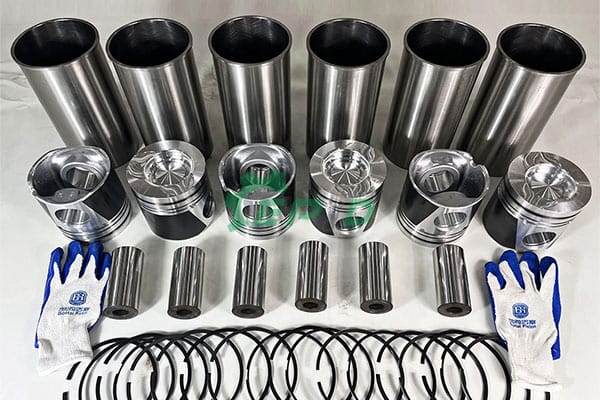
Replace bearing shells, thrust washers, and retaining hardware as a set. Confirm oil gallery plugs are clean and installed, and check that the oil pump drive engages correctly. Piston and liner condition also matters, since ring seating and compression depend on a straight, well-supported crankshaft. The Weichai WD615E2 piston kit is a useful reference when planning a complete top and bottom end refresh on WD615 builds.
Camshaft and Crankshaft Timing Relationship
The camshaft and crankshaft must be timed precisely to each other. Verify that timing marks on the gears or drive components align with the engine manufacturer’s procedure. On engines using gear trains, confirm gear backlash is within specification and that idler gears are serviceable.
After installation, rotate the assembly by hand through at least two full revolutions and watch for interference, tight spots, or valve-to-piston contact. Check camshaft end float and crankshaft end play before final torque. These simple steps catch most fitment problems while the engine is still on the stand.
Common Fitment Mistakes and How to Avoid Them
The most frequent error is ordering by engine model without confirming the build variant. Different power ratings and emissions configurations within the same family can use different camshaft profiles. Another common mistake is reusing worn timing gears with a new camshaft, which accelerates wear on the new part.
- Ordering without measuring journals and stroke
- Mixing components from different engine families
- Skipping bearing clearance checks
- Reusing stretched or worn retaining hardware
- Ignoring timing mark alignment procedures
Build a short checklist and follow it for every rebuild. Document measurements, part references, and torque values so future service is easier and warranty discussions are backed by data.
Building a Reliable Weichai Parts Sourcing Routine
Consistent sourcing reduces fitment risk. Work with a supplier who can confirm engine family, part configuration, and mating component compatibility before shipment. Keep a record of every part reference used in each engine so repeat builds follow the same proven combination.
Group purchases by engine platform to avoid mixing components between jobs. Label incoming parts with the engine serial they are intended for, and inspect them on arrival for damage or mismatch. A disciplined routine turns fitment from a gamble into a repeatable process.
Frequently Asked Questions
Can a WP12 camshaft fit a WP8 engine?
No. WP12 and WP8 engines use different camshaft profiles, journal dimensions, and drive arrangements. Always match the camshaft to the specific engine family and confirm measurements before ordering.
How do I confirm crankshaft fitment before ordering?
Record the engine model, displacement, stroke, main and rod journal dimensions, and flange pattern from the original crankshaft. Compare these with the replacement specification and confirm bearing saddle condition in the block.
Should I replace bearings when installing a new camshaft or crankshaft?
Yes. New rotating components should be paired with new bearing shells, thrust washers, and retaining hardware. Reusing worn bearings can cause poor oil clearance and shorten the life of the new parts.
Ready to plan your next rebuild? Browse the full Weichai diesel engine parts range to match camshafts, crankshafts, and rebuild components to your exact engine family.


