Why Correct Engine Identification Matters
Ordering the wrong component for a heavy-duty truck engine is an expensive mistake, and it happens most often when a workshop assumes that all Weichai WP-series engines share the same parts. The WP10, WP12, and WP13 are three distinct platforms with different bore sizes, stroke lengths, and component dimensions. A piston that fits a WP10 will not fit a weichai wp12, and a crankshaft from a WP13 will not drop into a WP12 block. Getting the family right before you open a parts catalogue saves both downtime and money.
This guide walks you through the practical checks that experienced technicians use in the field: reading the engine nameplate, confirming displacement, and spotting the visual cues that separate the three families. By the end you should be able to look at a truck, confirm which WP engine sits under the cab, and order with confidence.
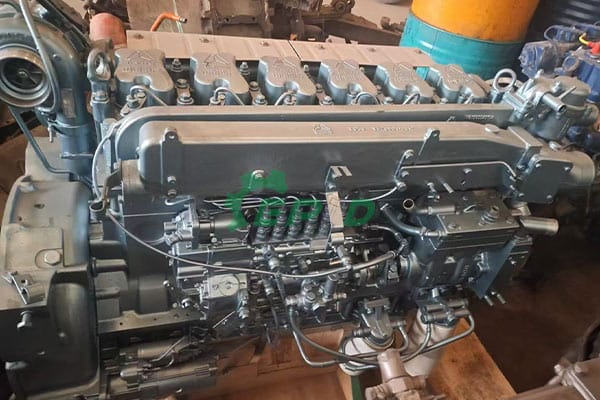
Start With the Engine Nameplate
The fastest and most reliable identification method is the engine nameplate, usually riveted to the side of the cylinder block or fitted on the rocker cover. The plate lists the engine model, serial number, displacement, and power rating. Look for a code beginning with WP followed by two digits. WP10, WP12, and WP13 are printed clearly, along with a suffix that indicates emission standard or application variant. Photograph the plate before you do anything else, because it is your reference for every future parts order.
If the plate is missing, corroded, or painted over, do not guess. Clean the area gently with a cloth and a little solvent, and check the flat machined pad near the oil cooler as a secondary location. Some rebuilt engines carry a workshop stamp rather than the factory plate, so cross-check the stamped number on the block with the vehicle documentation before ordering anything.
Displacement and Bore: The Numbers Behind the Names
The model numbers are not arbitrary. The WP10 displaces roughly 9.7 litres, the weichai wp12 displaces around 11.6 litres, and the WP13 displaces approximately 12.5 litres. These differences come from bore and stroke changes, which is exactly why internal components are not interchangeable across the families. If you can measure the bore through an injector hole or with the head removed, you can confirm the family even without a nameplate.
Displacement also affects external dimensions. The WP13 block is noticeably larger and heavier than the WP12, and the WP10 is the most compact of the three. When a truck is presented as a WP12 but the block looks unusually bulky, measure before you assume. A quick check of the block casting numbers and the general proportions will usually settle the question in minutes.
Visual Cues Around the Block and Head
With the bonnet open, several visual features help separate the engines. The WP13 typically uses a larger turbocharger and heavier front-end accessory drive, while the WP10 has a more compact manifold arrangement. The WP12 sits between them and shares some external architecture with the WP10, which is why it is so often misidentified. Look at the intake manifold shape, the position of the oil filter housing, and the size of the flywheel housing.
Casting marks on the block are another useful clue. Clean the side of the block and look for the raised casting numbers; these often include a family reference. Combine casting evidence with the nameplate and displacement, and you have three independent confirmations. That level of certainty is what prevents wrong-part returns.
Common Parts That Differ Between WP10, WP12, and WP13
Internal components are where misidentification hurts most. Pistons, liners, crankshafts, and camshafts are family-specific. For example, the weichai piston kit for the WD615 family is a different design from the WP12 piston assembly, and the crankshaft journal dimensions change between the WP12 and WP13. Always confirm the engine family before ordering rotating parts, because a returned crankshaft can cost weeks of downtime.
For the WP12 specifically, the WP12 camshaft assembly and the WP12 crankshaft are commonly requested items, and both require a confirmed WP12 identification before dispatch. If your engine turns out to be a WP13, the WP13 parts range covers the larger platform separately.
Checking the Vehicle and Transmission Combination
The truck around the engine is often the quickest sanity check. WP10 engines are common in lighter tractors and construction equipment, the WP12 dominates long-haul tractor units, and the WP13 appears in heavy haulage and high-power applications. If the vehicle’s rated gross weight and gearbox torque rating suggest a 12-litre class engine, a WP12 identification is plausible; a 13-litre badge on a light chassis should prompt a closer look.
Vehicle documentation, including the registration certificate and the maintenance log, usually records the engine model. Cross-reference this with the physical plate. When documents and plate disagree, trust the plate on the engine and investigate whether the engine has been replaced during a rebuild.
Building a Reliable Parts List
Once the family is confirmed, build your parts list around the exact model code and serial number. Note the emission variant, because WP12 engines were produced in several configurations with different injectors, turbochargers, and ECU calibrations. A parts supplier who asks for the nameplate photo and the serial number is protecting you from a wrong order, not delaying the sale.
For older units, the WD615-derived piston kits remain widely available and are a good reference point when comparing part families. The WD615E2 piston kit is a useful benchmark for understanding how Weichai piston designs evolved into the WP series. Keep a photo of your plate on file so future orders take minutes rather than hours.
Frequently Asked Questions
How can I tell a Weichai WP12 from a WP13 without a nameplate?
Measure the bore or compare block proportions. The WP13 displaces about 12.5 litres and has a visibly larger block and turbocharger, while the WP12 is around 11.6 litres. Casting numbers on the block side provide a second confirmation.
Are WP10 and WP12 pistons interchangeable?
No. Bore and compression height differ between the families, so pistons and liners are family-specific. Always confirm the engine model before ordering piston components.
Where is the engine nameplate usually located?
Most WP-series plates are riveted to the side of the cylinder block or mounted on the rocker cover. If it is missing, check the machined pad near the oil cooler and the stamped number on the block.
Source the Right Parts With Confidence
Identification is the first step; sourcing is the second. Browse the full Weichai diesel engine parts hub to match your confirmed engine family with the correct pistons, crankshafts, camshafts, and service components, and send your nameplate photo along with every enquiry.


